

Every Moment. One Intelligent Platform.
Know what’s happening across every interaction. Spot patterns, act faster, and lead with confidence.

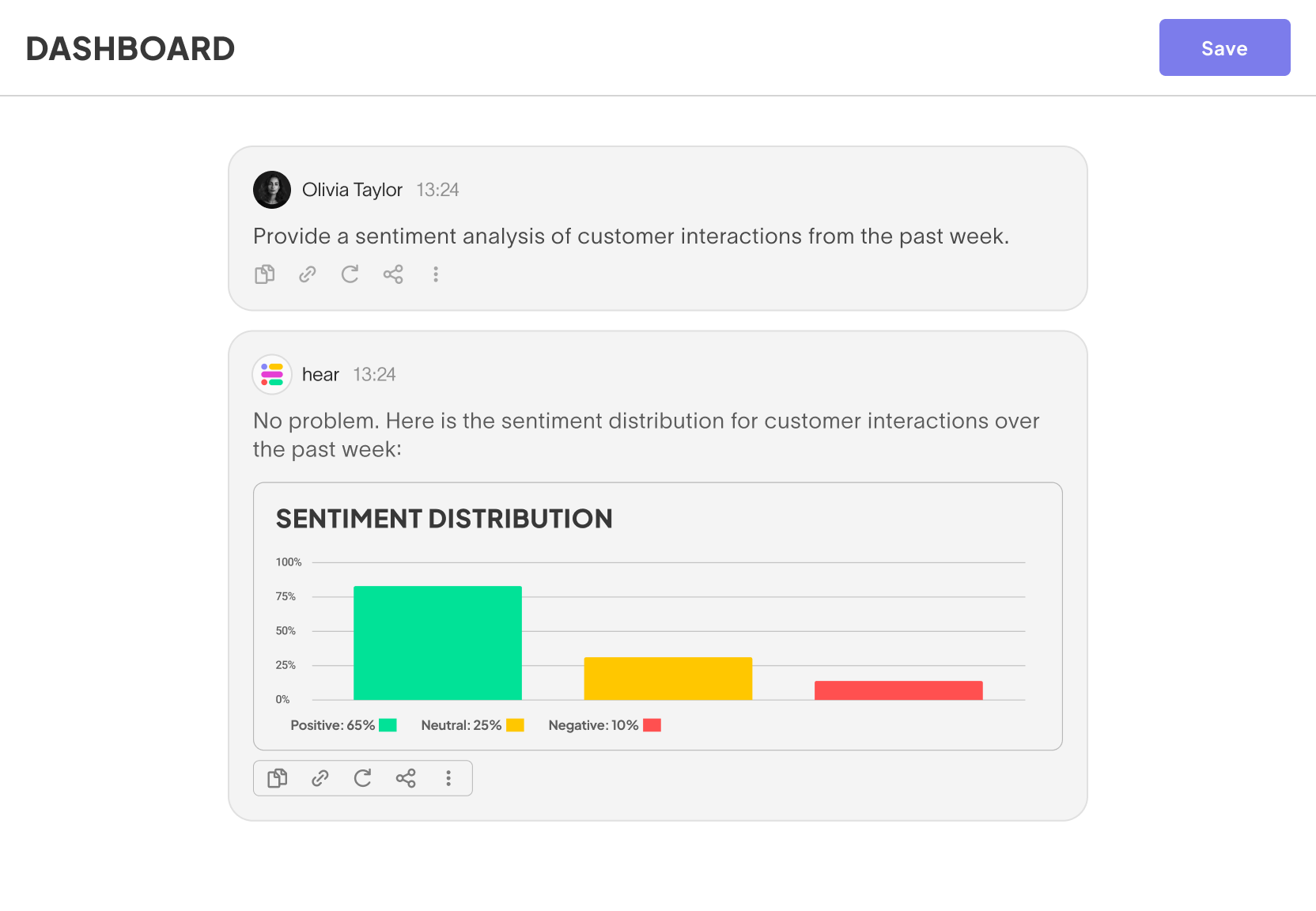
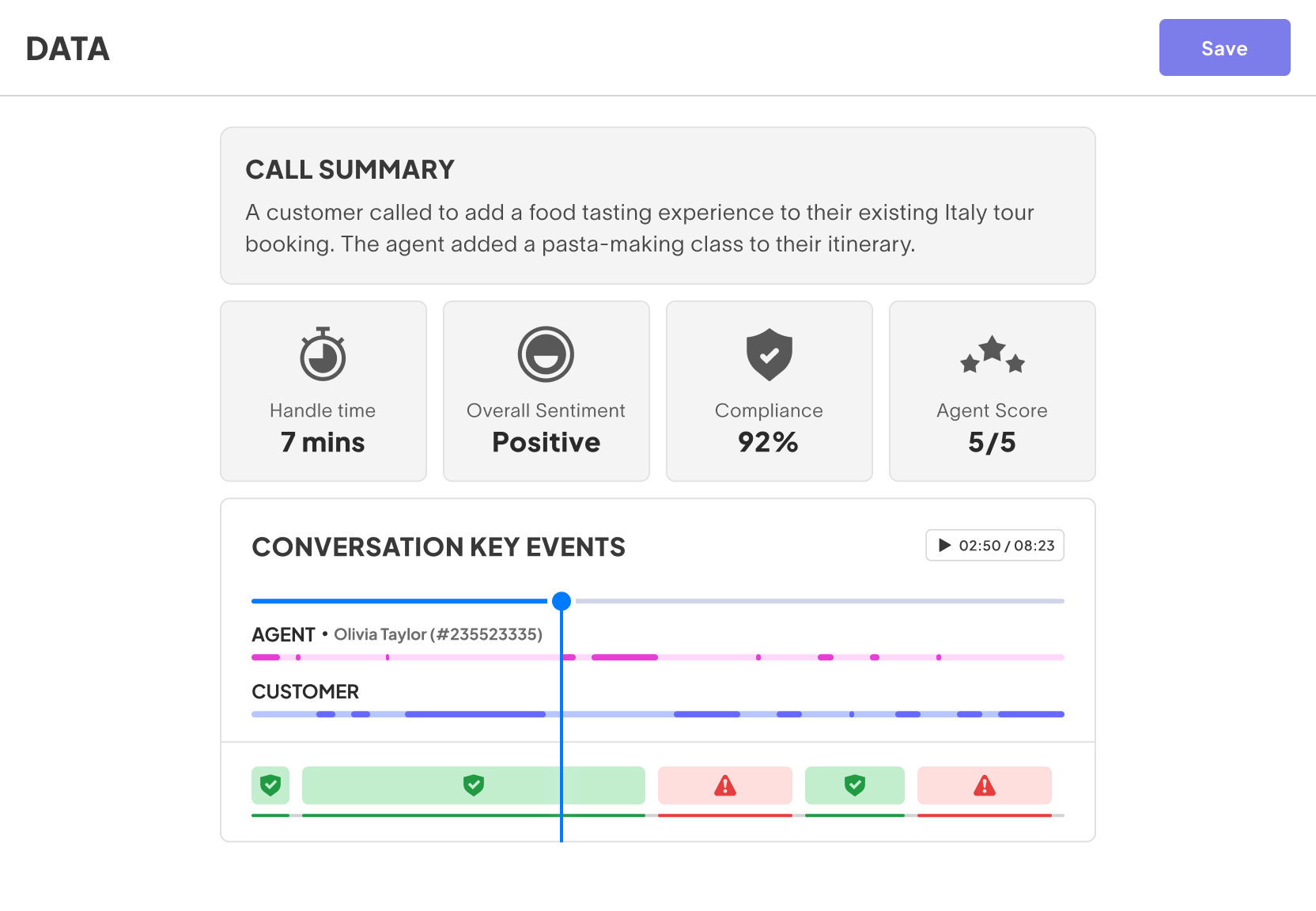
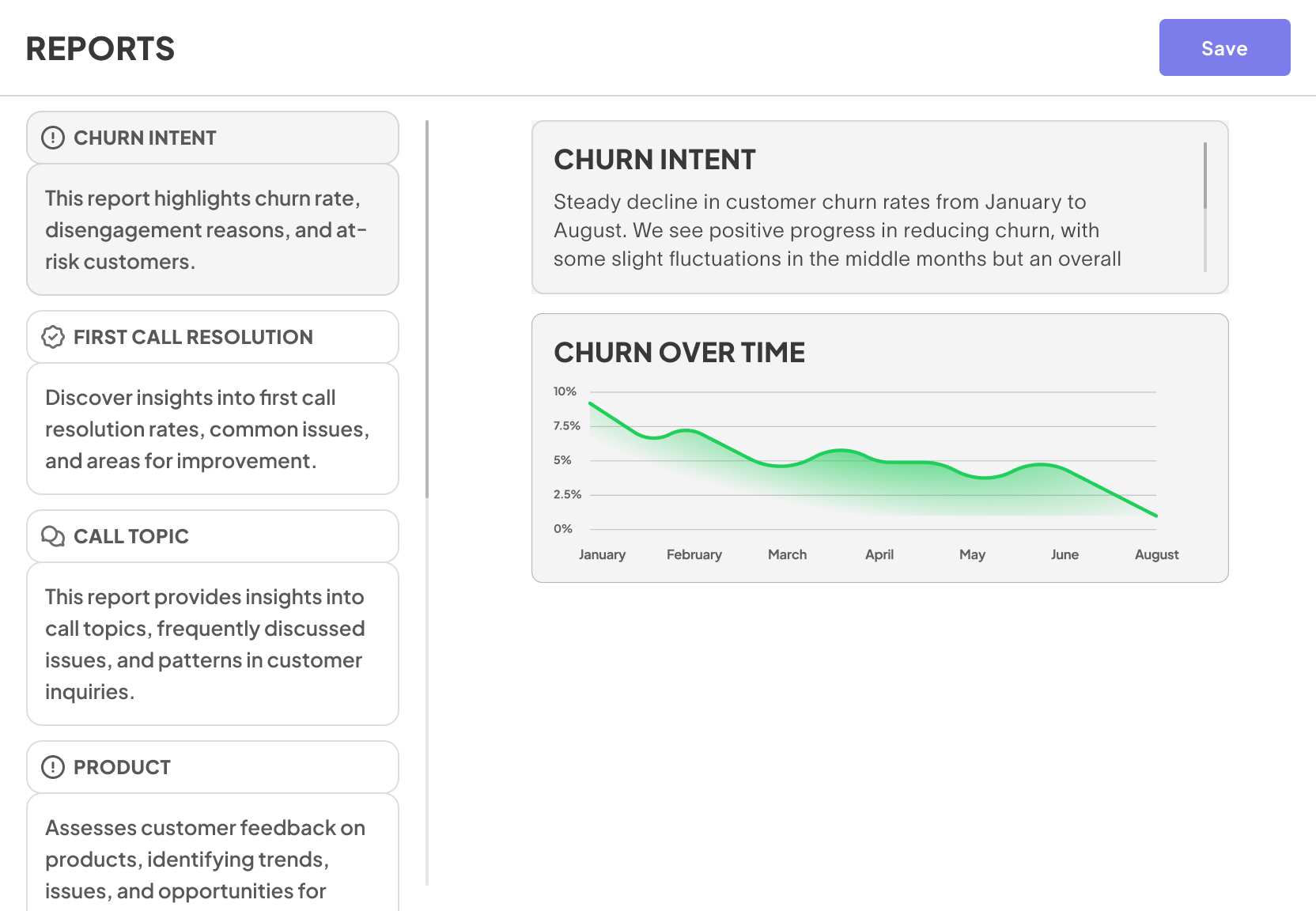
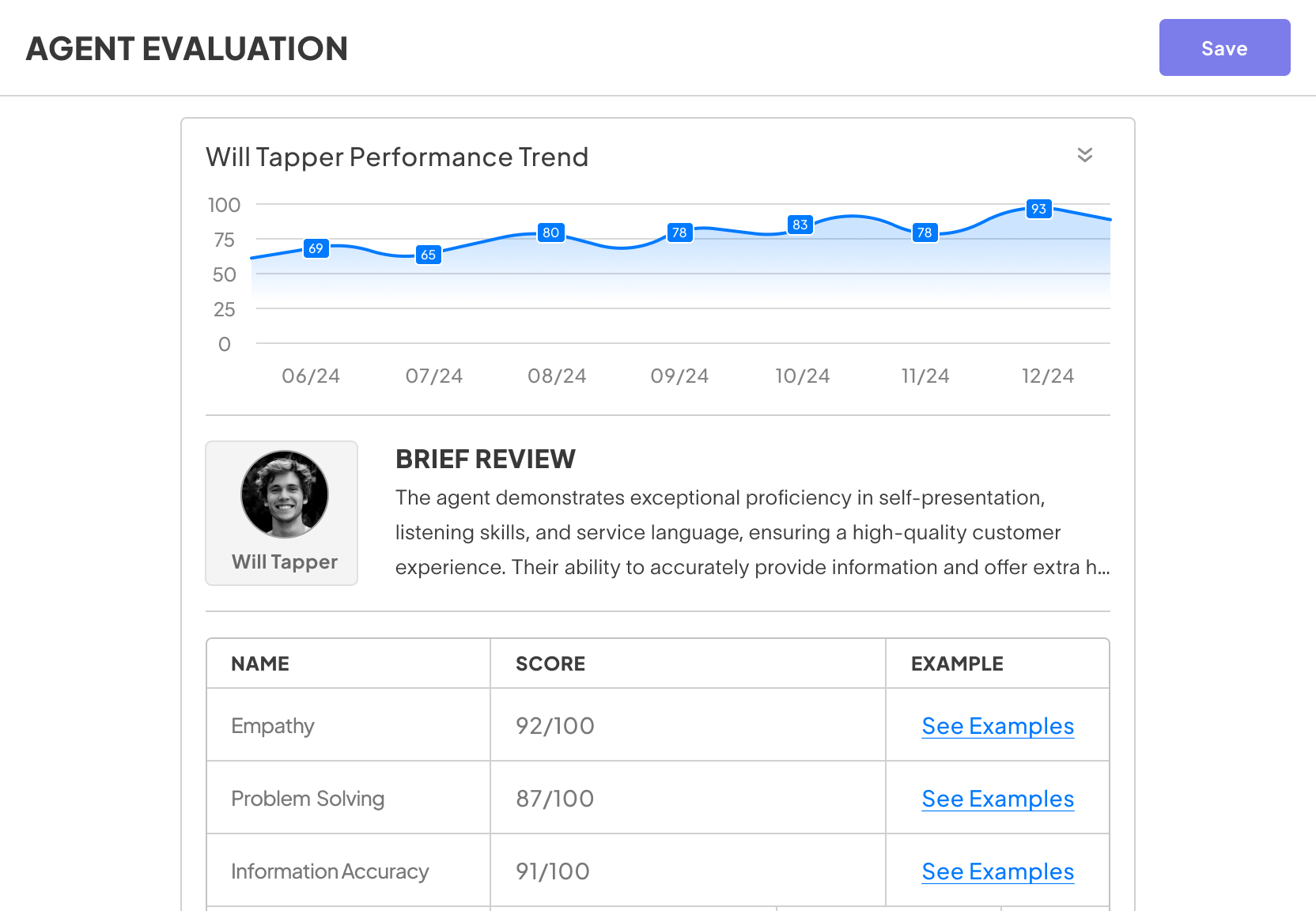

Your Data.
Our Priority.
Your data stays private, your trust protected.
We follow strict security standards and keep our processes transparent. Non-negotiable for the teams who can’t afford compromises; and neither can we.
Our AI
Accuracy is our foundation. Our dual-model framework verifies every output before it reaches you, so you can make decisions with confidence.

Hear has been a transformative partner for Shift, revolutionizing how we manage customer interactions. What was once a manual,
time-consuming process is now automated, accurate, and insight-driven.

Nethanel Avni

Hear has been a transformative partner for Shift, revolutionizing how we manage customer interactions. What was once a manual,
time-consuming process is now automated, accurate, and insight-driven.
Nethanel Avni
Hear has been a transformative partner for Shift, revolutionizing how we manage customer interactions. What was once a manual,
time-consuming process is now automated, accurate, and insight-driven.
Nethanel Avni

Built for Smarter
Contact Centers
Clarity built in. Keep your contact center running sharp.

Call Resolution
Completion trends, uncovered. See how every call wraps, and what that means for your team’s next move.
Call Issue Analysis
What’s getting in the way? Discover the top call blockers, so your team can fix what matters faster.
Compliance Tracking
Surfaces missed details in real time, helping teams close gaps, stay compliant, and avoid the backtracking that slows everyone down.
Turn conversation into your
next big breakthrough
Connect with our team to see how Hear transforms insights into action,
and action into results.

Stay updated
Make the most of AI-driven innovation for contact centers.

Communication Engine
Discover how conversation intelligence can turn customer interactions into actionable insights.
For most businesses today, customer interactions and internal communications produce a treasure trove of data. Yet this data often sits in silos, failing to realize its full potential. Communications risk becoming missed opportunities rather than catalysts for growth.
But forward-thinking companies are beginning to recognize conversation data as a proprietary asset to mine for insights. They’re embracing new techniques to extract intelligence from these interactions and transform the way they develop products, marketing, and strategy.
The Power of Communication Data
Every customer service call, email thread, chat transcript, and meeting discussion contains a wealth of signals. This data is unique and exclusive, generated from your specific customer and employee conversations rather than broad population statistics.
Communications data reveals
Customer pain points and needs, Product likes, dislikes and desires, Reputational perceptions and brand sentiment ,Emerging trends and market movements as well as Opportunities for innovation.
But perhaps most importantly, communications data contains insights you can't get anywhere else. It's not aggregated and available for sale from third-parties. This is proprietary intelligence exclusive to your business.
Too often, we let this data disappear into the ether after a given interaction. The insights get lost in the mix rather than systematically analyzed. This leaves opportunity on the table rather than fueling continual improvement.
Intelligence Transformation
Many companies have invested heavily in digitally transforming operations over the past decade. But digital transformation is just table stakes. The real opportunity is intelligence transformation – leveraging AI to build business intelligence from digitized communications.
Intelligence transformation means evolving from reactive to proactive:
- Listening to customers and employees to identify needs
- Analyzing interactions to reveal market trends early
- Continuously improving products, marketing, and operations
- Automating routine communications for greater efficiency
- Delivering personalized engagement powered by data
It’s a flywheel effect – better intelligence drives improved communications which generates more valuable data.
For instance, analysis might identify an emerging customer complaint. The business can proactively change processes and train staff to address the issue. Customers receive better service, reducing complaints. The improved experience leads to more sales conversations and advocacy.
Or data might reveal an unmet customer need. The business can develop features and messaging specifically to address that need. The personalized engagement boosts sales. And those sales conversations produce more data to fuel the next round of improvements.
When communication data informs strategies in this way, interactions become growth engines rather than cost centers. Every conversation builds greater intelligence to enhance the next engagement.
Achieving Intelligence Transformation
Evolving communications from sunk cost to growth accelerator requires executive buy-in plus commitment to best practices:
Make capturing and transcribing communication data a priority, with systems to ingest transcripts, recordings, chats across channels.
Focus AI analytics on deriving meaning from conversation data, avoiding just capturing vanity metrics on call volumes or durations.
Present insights through digestible dashboards, highlighting key trends, opportunities, and actions over raw data dumps.
Use human-AI collaboration for optimal outcome, with people setting direction based on AI analysis.
Improve communications experiences by addressing root causes revealed by data, not just reacting call-by-call.
Build a closed-loop culture focused on continuous improvement driven by conversation analytics.
Share select insights cross-departmentally to align around addressing key customer and employee pain points.
Make intelligence transformation a long-term change initiative not just a one-off analytics project.
The communication data goldmine awaits. It's time for leaders to commit to intelligence transformation as the next stage in their digital journey. Start unlocking the insights and value hidden within your conversations. Let each interaction build greater understanding to fuel future growth. Communication data holds the key to gaining competitive edge and realizing new potential. The conversation intelligence era has arrived.

How to Improve Call Center Quality Assurance
According to a worldwide study by the Qualtrics XM Institute, poor customer service costs businesses over $4.7 trillion in revenue annually.
While your customer service may be optimized, there's always room for improvement. You can be more proactive and holistic to increase customer satisfaction and revenues.
In this blog, we'll explore how to improve quality assurance in a call center through tried and tested steps and practices.
We'll also discuss how you can use modern technology, such as artificial intelligence, to make the process better, including the best AI-powered platform to help you enhance operational efficiency and customer experience.
TL;DR - Call Center Quality Assurance Checklist
Let's kick this off by listing the top steps to include in your contact center quality assurance checklist. We'll discuss each step in greater detail later in the blog.
- Develop a clear quality assurance strategy
- Implement a comprehensive conversation monitoring system
- Implement a comprehensive training, feedback, and reward program
- Invest in modern quality assurance technology
These steps can take time to bear great fruits, but the right technology can help you achieve significant results within the shortest time possible before trouble comes calling.
With Hear, an AI-powered conversation intelligence platform, you can monitor and analyze all your conversations to gain real-time insights for improving customer experience and boosting operational efficiency.
Transform your quality assurance and customer experience today - try Hear now.

What Is Call Center Quality Assurance?
Call center quality assurance (QA) is the systematic process that businesses use to ensure that customer service interactions are precise, compliant, professional, and efficient.
Call centers use this process to monitor and improve how they serve customers by:
- Monitoring and evaluating customer interactions regularly
- Applying feedback mechanisms
- Analyzing performance metrics
- Providing continuous training, coaching, and excellence awards to your employees.
The Importance of Quality Assurance in Call Centers
Imagine you contacted the customer support of your favorite business and received top-notch service that exceeded your expectations and enhanced your trust in the brand. Now that's the power of quality assurance!
You can do the same for your customers and enjoy benefits such as:
- Better Customer Service: Through quality assurance, you analyze customer interactions to identify areas of strength and weakness as well as strategies to improve your customer service. Every customer who reaches out to your support is more likely to leave with a smile, feeling appreciated and satisfied.
- Agent Empowerment: You'll be able to empower your call center agents through constructive feedback, continuous training, and excellence awards. Quality assurance can help keep them motivated to deliver the best service possible, even in the face of challenges, such as conversation complexity.
- Improved Bottom Line: Your business's bottom line can improve because you'll avoid costly mistakes that can damage your reputation or cost it money. When customers are happy, they are more likely to recommend your business to others, potentially increasing brand visibility and sales.

Challenges in Call Center Quality Assurance
You can face the following challenges in call center QA:
- Difficulty Standardizing Evaluation Procedures: It can be hard to establish a consistent and objective evaluation process, especially without modern technology systems or platforms.
- Limited Visibility into Multi-Channel Performance: You may struggle to monitor how each agent performs across various channels if you don't have clear visibility into each channel. Agent performance may also be inconsistent, and improving it becomes an uphill task if you can't monitor it in the first place.
- Customer Churn: Many customers may leave conversations before their issue is resolved. You'll not only have lost a potential repeat customer, but also a broader opportunity to assess your customer service and identify where it’s strong and what you need to improve.
- Expensive and Inefficient Manual Processes: Most contact centers still conduct quality assurance manually, with a designated person or team sampling and reviewing only a small percentage of interactions. The process is costly because of the significant human effort and time required.

Key Components of a Strong Call Center QA Program
A strong call center quality assurance program has several elements that promote optimal agent performance and high-quality customer interactions.
Be sure to include the components below in your program.
- Quality Goals and Standards: You must set clear and achievable QA goals and standards that align with your overall business strategy and objectives. For example, you can prioritise higher customer satisfaction scores, empathy, and consistent conversation-handling procedures.
- Conversation Monitoring and Evaluation: You need to monitor agent-customer interactions regularly by recording and evaluating conversations. The focus should be on both positive and negative conversations to discover areas of strength and opportunities for growth.
- Performance Metrics and Analysis: It's important to set and analyze critical performance metrics, including customer satisfaction (CSAT), First Call Resolution (FCR), and average handling time (AHT). When you analyze these metrics, you can see trends, areas for improvement, and the effectiveness of your quality assurance efforts.
- Feedback and Coaching: Regular and constructive feedback is necessary, based on conversation monitoring and performance data. You'll want to invest in coaching and training to promote a culture of continuous learning.
- Continuous Review and Improvement: Review the effectiveness of your quality assurance program regularly and adjust as needed. You can use feedback from agents and customers to improve on weaknesses, refine quality standards, improve coaching, and enhance the overall customer experience.

How to Improve Quality Assurance in a Call Center
Let's now look at the steps to improve QA in a call center in greater detail.
1. Develop a Clear Quality Assurance Strategy
Start by defining specific, measurable, achievable, relevant, and time-bound quality assurance (SMART) goals. Go beyond basic metrics like AHT and CSAT to consider First Call Resolution, compliance, and qualitative aspects like proper tone and empathy.
Involve your agents in developing the strategy to secure their ownership of the process. They will be more collaborative and receptive if you honor their insights, especially regarding tracking and improving the quality of their work.
2. Implement a Comprehensive Conversation Monitoring System
Monitor all your customer support channels in real time by analyzing 100% of customer interactions across voice, chat, and email rather than just random samples.
100% cross-channel conversation monitoring ensures consistent service quality, performance tracking, and coaching recommendations.
Real-time monitoring allows for immediate feedback and intervention in critical situations.

3. Implement a Comprehensive Training, Feedback, and Reward Program
You should train your agents regularly to keep them up-to-date with best practices, internal policies, regulatory compliance, and even new services or products.
You can also provide real-time feedback based on individual and team performance to promote a culture of appreciating effort and focusing on improvement.
You'll also want to make things more interesting by incentivizing agents and their team leaders with rewards, such as bonuses and public acknowledgement.
It's important to celebrate your employees when they improve, not just when they achieve high scores, to keep them engaged and motivated.
4. Invest in Modern Quality Assurance Technology
You can use next-generation quality assurance technology, such as AI-powered interaction intelligence platforms, to automate QA, monitor compliance, and identify opportunities for improvement.
Look for a platform that can:
- Integrate quickly and easily with your telephony and Customer Relationship Management (CRM) system.
- Help you become more operationally efficient by reducing AHT and increasing FCR rates.
- Help you share real-time data or statistics with your team to promote full transparency and more visibility into agent performance and client satisfaction.
- Monitor customer interactions in real time to offer instant feedback.
- Analyze every customer interaction across various channels.
- Automate QA scoring.
- And more.
Here’s how to tell if your call center is ready for AI.

How AI Enhances QA in Call Centers
Artificial Intelligence (AI) is transforming quality assurance in call centers by automating manual processes, enabling real-time insights, and delivering comprehensive analyses across 100% of customer interactions.
As an AI-powered contact center conversation analysis platform, Hear can do the following:
- Analyze 100% of interactions at scale across various channels to eliminate limited conversation sampling and manual reviews.
- Promote compliance by consistently monitoring and flagging compliance risks through AI call analysis.
- Enhance visibility into agent performance, including trends and coaching opportunities.
- Analyze both voice and text interactions to ensure consistent quality, compliance, and adherence to internal and industry customer service procedures.
- Enhance visibility into customer sentiment through comprehensive sentiment analysis.
- Automate quality assurance scoring to ensure consistent service quality.
- Detect customer churn signals early to remain autonomous rather than reactive.
- Deliver real-time business insights to drive revenue growth, enhance customer experiences, and optimise agent performance.
- Enhance quality assurance efficiency and reduce costs by automating and analyzing a larger volume of interactions than human reviewers can handle.
Book a demo today to see how Hear can enhance your call center quality assurance and customer satisfaction.

Call Center Quality Assurance Best Practices
Applying best industry practices in quality assurance for a call center can help you ensure consistent, high-quality customer service and continuous improvement.
Let's check out a few practices you can employ.
- Focus on the Customer Experience, Not Just Compliance: Even as quality assurance involves compliance with external regulations and internal policies, you can encourage your team to personalize conversations while staying within your on-script guidelines. Emphasize empathy and monitor how agents connect with customers, especially in sensitive situations. You can use Hear to analyze as many signals as possible from agent-customer interactions to evaluate compliance and customer experience.
- Integrate Quality Assurance with Other Departments: Share your quality assurance findings with the production, training, marketing, and operations teams to ensure that every department contributes to the overall customer service experience. QA data can reveal recurring customer complaints, which you can share to promote collaborative problem-solving aimed at improving customer service.
- Maintain Comprehensive Documentation: Document all your QA procedures and policies to ensure everyone understands how you evaluate conversations and why. Develop and update scorecards and standards as your business needs evolve. You can also maintain audit trails by keeping records of all your evaluations, feedback, and coaching, ensuring compliance and transparency.

Frequently Asked Questions (FAQs)
Let's wrap up with answers to a few questions about quality assurance in call centers.
How Often Should QA Evaluations Be Conducted?
You should conduct QA evaluations on an ongoing basis, which can be weekly, monthly, or quarterly, to ensure consistency and identify potential problems early.
The frequency depends on the volume of interactions, agent performance, internal goals, and the complexity of conversations.
How Do You Score Calls in a Call Center?
You can score calls by evaluating how an agent performs across conversations against predefined criteria.
With an AI-powered platform like Hear, you can automatically score calls through speech analytics, which analyzes specific phrases and sentiment patterns to assess an agent's performance.
What’s the Difference Between QA and Call Monitoring?
Call monitoring is a quality assurance method that focuses on listening to and evaluating agent-customer voice interactions.
Quality assurance is the broader range of activities for improving overall service quality and compliance.
How Does Speech Analytics Help in QA?
Besides helping score calls, speech analytics is beneficial in other ways. The technology helps detect opportunities for sales or improvement by uncovering customer insights hidden in your call recordings.
The general insights you gain from analysing speech patterns help you identify common issues, proactively address problems, and enhance coaching for agents.
Conclusion
To improve call center quality assurance, you can develop a clear QA strategy, monitor conversations across multiple channels, and assign a specific staff member to own the process.
You can also share data with your team, encourage cross-department collaboration, and train your agents and team leaders on an ongoing basis.
Investing in quality assurance technology is also worthwhile to automate manual tasks, detect real-time customer sentiments, and identify revenue opportunities.
As an AI-enabled conversation monitoring and evaluation platform for call centers, Hear effectively addresses the need to enhance customer experience and operational efficiency.
You can use Hear to automate call scoring, analyze all your conversations, and gain actionable real-time insights for better decision-making.
.png)
The Autonomous Contact Center
Why the Future of Customer Experience Is Proactive, Not Reactive
The contact center is at a breaking point. For decades, it’s been managed like a cost center, a place to handle complaints, close tickets, and move on. But that mindset is no longer viable. In a world where customer expectations evolve in real time, reactive service simply can’t keep up.
The future? It belongs to the Autonomous Contact Center — a self-learning, intelligent system that doesn’t just respond to customers, but anticipates their needs and actively orchestrates their journey across every touchpoint.
This isn’t science fiction. The technology is here. The architecture is real. And leading organizations are already making the shift.
The Problem with Today’s Contact Centers
Modern contact centers are drowning in complexity. Customer data is fragmented across dozens of channels — social media, apps, phone calls, web chats — and critical insights are buried in unstructured logs. Agents are overwhelmed. Managers rely on outdated KPIs. And AI tools are often bolted on as band-aids rather than integrated solutions.
Despite all this noise, one thing is clear: the contact center holds unmatched strategic potential. It’s the organization’s sensory system, where raw customer emotion, intent, and need are first expressed.
What’s missing is a brain to make sense of it all.
Enter: The CX Orchestration Engine
At the heart of the Autonomous Contact Center lies the CX Orchestration Engine — a new architectural core that transforms the contact center from a reactive support hub into a dynamic, self-optimizing ecosystem.
This engine unifies fragmented data, reasons over context, and takes proactive action to guide each customer journey, often before a need is explicitly expressed. It’s not just about automation. It’s about intelligence, autonomy, and orchestration.
Imagine a system that notices when a high-value customer is struggling with a feature before they reach out, and intervenes with personalized help via their preferred channel. Or one that detects recurring AI escalations and triggers internal knowledge updates without human prompting.
That’s what orchestration looks like.
A New Role for Human Agents
Contrary to popular fear, the autonomous contact center doesn’t eliminate human agents — it elevates them.
In this new model, agents become:
- Strategic problem-solvers for emotionally charged or complex issues
- AI curators who train models and oversee outputs
- Innovation catalysts who surface patterns and shape product direction
The routine, repetitive work is offloaded to AI. What remains is high-value, deeply human work — empathy, judgment, and trust-building.
New Technology, New KPIs, New Mindsets
This transformation demands more than just tech. It calls for a rethinking of how contact centers are managed.
Instead of measuring success by average handle time or call deflection, forward-looking organizations will track:
- Proactive resolution rate
- Customer journey completion
- AI containment with satisfaction
- Strategic impact on product, sales, and retention
And instead of teams bogged down by dashboards and disconnected data, leaders will gain a chat-like interface into the heartbeat of the contact center, asking questions, identifying trends, and triggering improvements in real time.
The Road Ahead
The shift to an autonomous contact center is not a single implementation; it’s a strategic journey. But the payoff is clear:
- Up to 40% higher productivity
- 50% faster resolution
- And a fundamental shift in how businesses understand and engage their customersUntitled document.
In future posts, we’ll go deeper into the layers of the architecture, the role of generative AI, how to build orchestration logic, and how to manage teams in this new reality.
But for now, remember this:
The best contact centers don’t wait for problems. They see them coming and solve them before the customer ever has to ask.

Is Your Contact Center Ready for AI? Here’s How to Tell
AI is changing the game for contact centers—but not every operation is set up to make the most of it. One of the first questions we hear from leaders is, “Is our team ready for this?” The answer depends less on technology and more on your foundation.
AI isn’t a silver bullet—it’s a force multiplier. The best results come when AI builds on solid leadership, clear processes, and focused goals. If you’re considering bringing AI into your contact center, here are five indicators that you’re ready to turn potential into performance. If you’re not quite there yet, don’t worry—these checkpoints can also guide your next steps.
1. Committed Leadership That Leverages Insights
AI can highlight inefficiencies, uncover hidden risks, and surface coaching opportunities—but leadership has to use those insights to create change.
✓ Are your supervisors focused enough to act on insights?
When managers are responsible for too many agents, data often sits untouched. A reasonable manager-to-agent ratio ensures that AI-generated insights don’t get buried and can translate into real performance improvements.
✓ Are managers using AI as a performance driver—not just a tracker?
AI is more than a compliance checker. Leading contact centers use it to celebrate wins, run performance challenges, and reinforce positive behaviors. That mindset shift—from monitoring to motivating—is a game changer.
2. A QA & Coaching Framework That’s Ready to Scale
If your team already has structured quality assurance and coaching workflows, AI can help scale them without compromising quality. But if these processes are inconsistent or unclear, automation may amplify the chaos.
✓ Do you use scorecards and consistent call reviews?
AI thrives when it enhances what’s already working. If your QA is disciplined and criteria-based, Hear can automate evaluations and spot patterns faster and more accurately than a human-only review.
✓ Do QA insights lead to real action?
It’s not enough to track metrics—great contact centers act on them. When AI flags an issue, is there a feedback loop? Teams that coach regularly based on data will see stronger improvements over time.
3. A Central Owner for Content & Guidance
AI systems need context. If no one owns the knowledge base, scripts, or workflows that guide agent behavior, AI can’t deliver relevant, timely support.
✓ Do you have a content lead who understands both agent needs and business goals?
This person should know what leadership wants and what agents actually experience. That way, AI recommendations are practical, on-brand, and aligned with outcomes.
✓ Can they update materials quickly and independently?
AI loses value if it’s running on stale scripts. The best teams give content owners the authority to make updates in real time—keeping guidance fresh and actionable.
4. Clear Visibility into Agent Pain Points
AI should solve real problems—not just "improve conversations" in a vague, abstract way. The more specific your understanding of agent challenges, the more targeted and helpful the AI can be.
✓ Do you know your top agent pain points?
Whether it’s call control, knowledge gaps, or handling difficult customers, knowing what’s holding your team back is critical. Hear can help you measure, but first, leadership needs to listen.
✓ Are your AI goals concrete and measurable?
Vague goals yield vague results. Are you aiming to reduce average handling time? Improve sentiment? Increase first call resolution? Specific goals ensure your AI efforts are strategic—not just experimental.
5. Operational Readiness for Personalization
AI is at its best when it can tailor guidance to the situation. That means your call flows and campaigns need enough structure and segmentation for the AI to adapt accordingly.
✓ Are your call flows clearly defined?
When every call gets routed to a generic queue, there’s little context for AI to personalize its feedback. Organized IVR paths and clean routing logic help AI show up where it matters most.
✓ Are campaigns segmented by purpose or call type?
Blending sales, support, and retention into a single workflow can dilute AI’s impact. The more specific the campaign, the more targeted and relevant the guidance.
Where Do You Stand?
If you answered “yes” to most of these questions, congratulations—you’re in a strong position to benefit from AI-powered insights. If not, this checklist gives you a roadmap to prepare your team for success.
Remember: AI doesn’t replace great teams. It amplifies them.
At Hear, we help forward-thinking contact centers identify the gaps, build the right foundations, and roll out AI that delivers real results—from better compliance and coaching to faster resolution times and smarter business decisions.
Curious how ready your contact center is? Let’s find out—together.